Arriving, not just reaching
The last metre decides whether a robot is useful: where to stand, which way to face, and how much room the turn really needs.
LIVE · A* + PURE PURSUIT · 2D LIDAR · TEACHING MODEL
Click the floor to drop a high chair — watch it replan

Robotics, around real people
I build the software that lets robots work in rooms full of people — navigation, perception and the agents that run on them. Co-founder of FoodLink System.
A map says where the table is. It doesn’t say a high chair arrived, the Wi-Fi dropped, or a guest stepped into the aisle. That gap is where I work.
The last metre decides whether a robot is useful: where to stand, which way to face, and how much room the turn really needs.
At FoodLink we build Pip — the AI agent that runs on restaurant service robots, with venue knowledge, tools and a clean handoff to staff.
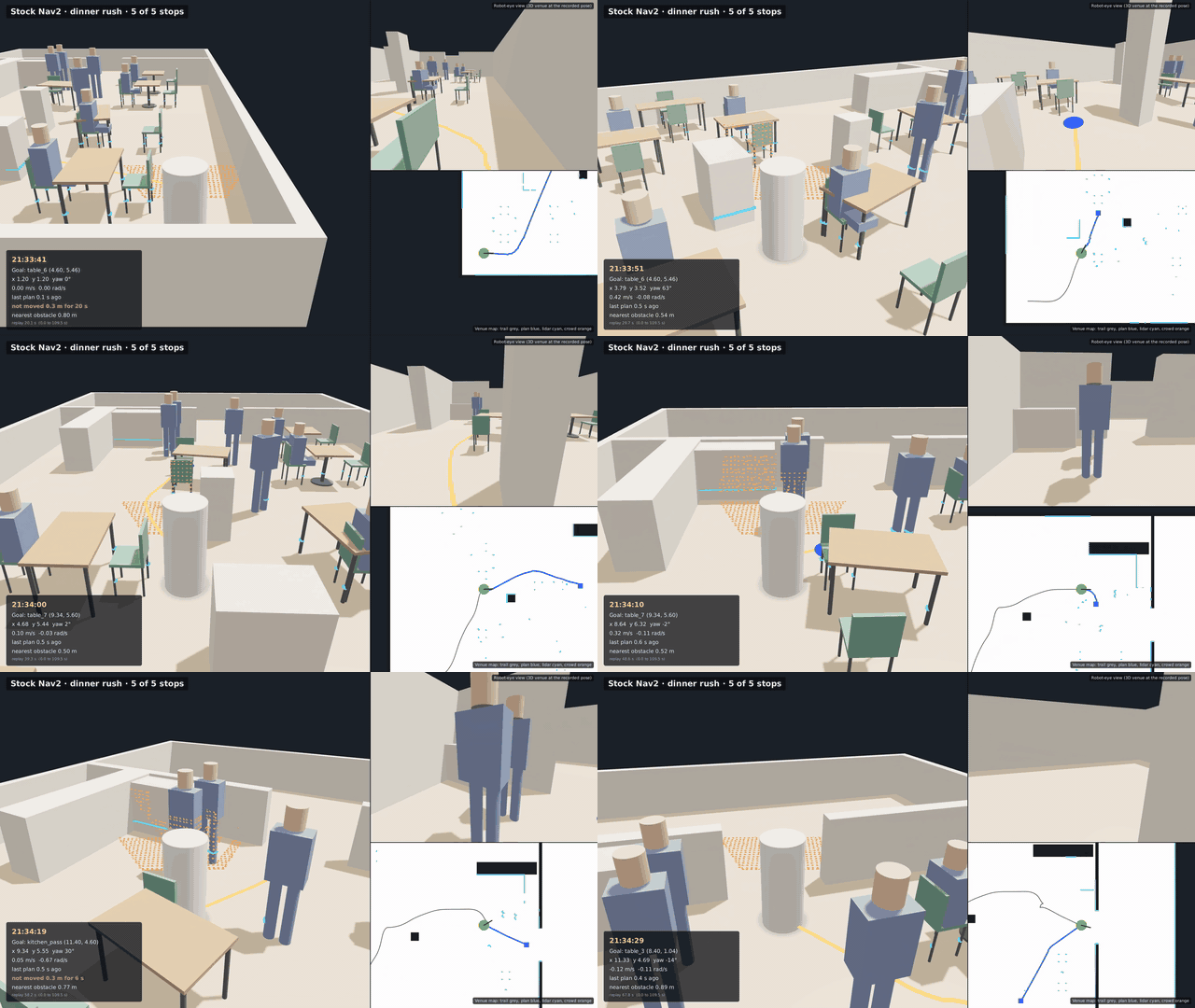
foodlinksystem.com ↗ANEWS puts an unmodified Nav2 stack into a synthetic dinner rush, records every run and makes the failure replayable.
ANEWS ↗A simulated restaurant shift for your real Nav2 stack: moved tables, chairs, guests and queues. The simulator is the robot, not the planner.
git clone https://github.com/NelsenEW/ANEWS
cd ANEWS/demo && docker compose upFirst Prize with NTU’s MLDA Robotics team, out of 117 teams including MIT, CMU, the University of Zurich and Imperial. Code written in simulation, run on real robots in Beijing.
Organiser’s announcement ↗38 interactive lessons across perception, navigation, interaction and fleets — change a parameter, see what changes.
Open the course ↗Instructor on NTU’s UAVIONICS design project; open drone, ROS and workshop material from the MLDA Robotics days.
espdroneespdrone-rosEEE-DIP-UAVIONICSeth-zurich-solutionMLDA-RMUA
See the projects ↗It answers from this site’s own facts and shows where each answer came from. Browser agents can also operate this site through WebMCP — or read llms.txt · agent.json.